Why do birds have a keeled sternum
Why do birds have a sternum?
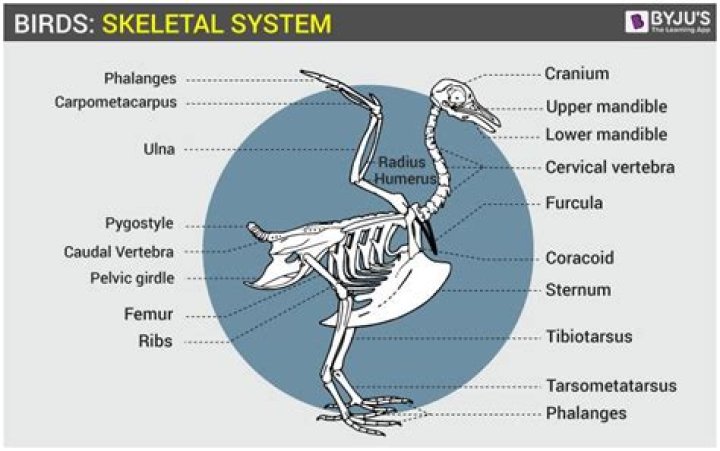
Birds are the only living vertebrates to have fused collarbones and a keeled breastbone. The keeled sternum serves as an attachment site for the muscles used in flying or swimming.What is the sternum and why is it necessary for birds to fly?
It provides the anchor for the flight muscles. Notice that it’s huge and sticks out! When a bird flies its keel is positioned in the air the same way a boat’s keel is positioned in the water — one of many reasons why the sternum takes this shape. … Ostriches, emus, cassowaries, rheas and kiwis all have flat sternums.Do birds have a deep keeled sternum?
Unlike the sternal bones in other living animal groups, the massive keeled sternum that characterizes flying birds is one of the most distinctive skeletal features of the group, attesting to its highly specialized purpose1. … This large bone provides attachment surface for the powerful flight muscles, the m.Why do penguins still have a keel on their sternum?
The bones of a bird’s skeleton are hollow. This means that they are lightweight but still strong enough for flying. The huge muscles that power the wings attach to a flat part of the breastbone called the keel. … Penguins have a keel, but it helps them to swim, as they cannot fly.What is the function of the humerus in a bird?
From a functional standpoint, the humerus is a key element in the skeleton of vertebrates as it is the forelimb’s bone that connects with the pectoral girdle. In most birds, the humerus receives both the forces exerted by the main flight muscles and the aerodynamical stresses exerted upon the wing during locomotion.Do all birds have wishbones?
Not all birds have wishbones – hummingbirds and some parrots are among the exceptions – but Jenkins believes the starling’s wishbone spring is typical of most feathered creatures, including the Thanksgiving turkey.Do flightless birds have a keeled sternum?
With the exception of penguins, which have adapted to “flying” through the water, most flightless birds lack a keeled sternum for flight muscle attachment. These skeletal adaptations, along with the absence of flight feathers, permanently ground these birds.Is Penguin a ratite?
Most living forms belong to the order Struthioniformes (a group that includes the ostrich, the rhea, the cassowary, the kiwi, and the emu); however, they are more commonly known as ratites. Also flightless, but unrelated to the ratites, are penguins (order Sphenisciformes).In which bird keel is absent in sternum?
Description for Correct answer: A keel is absent in some of the flightless birds. A keel is an extension of the sternum or breastbone. It is not found in duck.Why do ratites not have a keeled sternum?
Unlike other flightless birds, the ratites have no keel on their sternum — hence the name, from the Latin ratis (raft, a vessel which has no keel – in contradistinction to extant flighted birds with a keel). Without this to anchor their wing muscles, they could not have flown even if they developed suitable wings.Do birds have phalanges?
The basic number of phalanges (sections) on the toes is two, three, four, and five, respectively, one more than the number of the toe. Most birds have four toes, the fifth being always absent, but there are many variations in the number of digits, or phalanges, representing reductions of the basic arrangement.Why do birds have wishbones?
The furcula (Latin for “little fork”) or wishbone is a forked bone found in birds and some other species of dinosaurs, and is formed by the fusion of the two pink clavicles. In birds, its primary function is in the strengthening of the thoracic skeleton to withstand the rigors of flight.Can an emu and ostrich mate?
Emus and ostriches are polygamous in different ways. Female emus mate with a male, lay eggs, and then leave that male, who incubates and cares for offspring. The female then mates with another male. Male ostriches fight to create a harem of five to seven females. Eggs are laid in communal nests.Are Kiwis extinct?
Not extinct Kiwi/Extinction statusIs a Turkey a ratite?
A ratite is a bird that does not have a keel (the breastbone of a bird). Ratites do not fly, so they do not need the strong breast muscles typical in birds that have a keel (such as chickens, turkeys, and ducks). … Ratites include ostriches, emus, and rheas.How do emus mate?
During the courtship, both genders start strutting and circling; ruffling out their feathers and cocking their heads in a shy posture. The male starts a mating dance with slow, snake-like back-and-forth movements of his head while circling around the female.Is a cassowary a turkey?
They are descended from dinosaursSome have claimed the cassowary to look like a ‘giant prehistoric turkey’, but they are in fact descendants of dinosaurs.