data /
Characteristics of reseller market
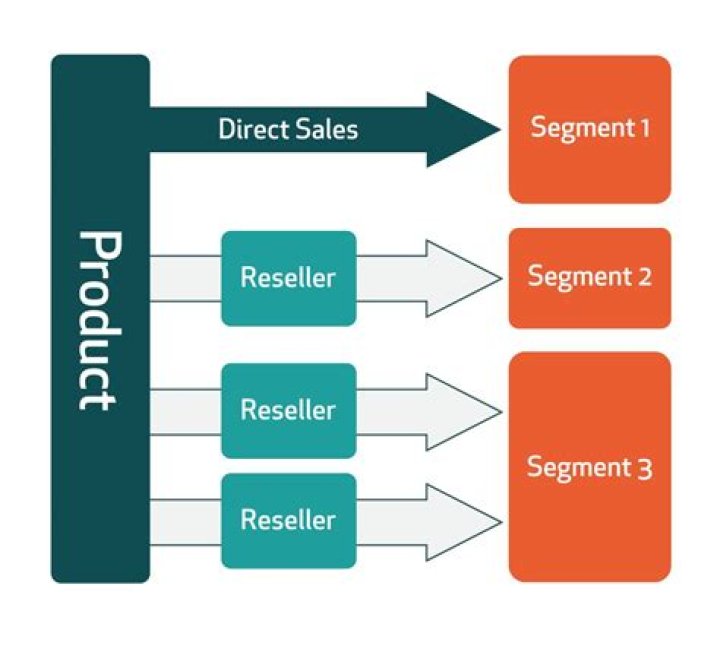
What are the characteristics of a reseller?
Price Characteristics:The main objective of a purchase by a reseller is to make profit. However they are more concerned about the prices as they are directly in touch with the ultimate customers. ii. In industrial goods manufactures product will be attractive to a reseller if it provides a fair amount of margin.
What are the characteristics of consumer market?
Behavioralistic characteristics of consumer markets include product usage rates, brand loyalty, user status or how long they have been a customer, and even benefits that consumers seek. Companies like to know how often their consumers visit their restaurants, stores or use their products.What are market characteristics?
For example, common characteristics of a market segment include interests, lifestyle, age, gender, etc. Common examples of market segmentation include geographic, demographic, psychographic, and behavioral.Which is an example of resellers?
Resellers may operate in a range of industries within the IT sector. In hosting, for example, a web hosting reseller purchases services from a larger hosting provider and resells the services to customers. According to Gartner, software resellers include such companies as CDW, Insight, SHI, Softchoice and SoftwareONE.What is a reseller called?
A reseller is a company or individual (merchant) that purchases goods or services with the intention of selling them rather than consuming or using them.What are examples of value-added?
The addition of value can thus increase either the product’s price that consumers are willing to pay. For example, offering a year of free tech support on a new computer would be a value–added feature. Individuals can also add value to services they perform, such as bringing advanced skills into the workforce.What is an example of a value added reseller?
Examples of common value–added resellers (also known as VARs) are computer retailers and service companies, automobile dealerships, and furniture stores. One of the major aims of companies in providing value–added services is to develop relationships with customers that will lead to repeat business.What is the formula of value added?
It is used as a measure of shareholder value, calculated using the formula: Added Value = The selling price of a product – the cost of bought-in materials and components.How do you identify value added activities?
Value Added Activities must satisfy the following three criteria:- Work that the customer is willing to pay for.
- Work that physically transforms the product (or document/information)
- Work that is done right the first time.
What are the 8 Wastes?
The 8 wastes of lean manufacturing include:- Defects. Defects impact time, money, resources and customer satisfaction.
- Excess Processing. Excess processing is a sign of a poorly designed process.
- Overproduction.
- Waiting.
- Inventory.
- Transportation.
- Motion.
- Non-Utilized Talent.
What are value added activities?
A value–added activity is any action taken that increases the benefit of a good or service to a customer. A business can vastly increase its profitability by recognizing which activities increase value and which do not, and stripping away the non value–added activities.Is set value added?
Not all manufacturing activities in a factory add value to the product. Typical non-value added activities include scheduling, moving work-in-process from point to point, setting up equipment, recording time spent on a particular job, inspecting a part, and billing a customer.Is quality inspection a value added activity?
Inspection is a non-value–added activity. Since organizations have to inspect to provide confidence to their clients, in that case, inspection should not be a standalone activity.What is value added in lean?
Value added is defined in terms of specific products or services that have specific capabilities / features, offered at specific prices to specific customers at time intervals. This value is the starting point for Lean Production, since in Lean Manufacturing everything comes from the customer perspective.Is process a value added activity?
There are several examples of Non-Value Added activities found commonly among different organizations. Some of the most commonly found are: Process steps which are not needed. Unnecessary movement of goods or resources within or outside the organization.When should I use lean?
Lean focuses on analyzing workflow to reduce cycle time and eliminate waste. Lean strives to maximize value to the customer while using a few resources as possible. Six Sigma strives for near perfect results that will reduce costs and achieve higher levels of customer satisfaction.What is the meaning of value?
1 : a fair return in goods, services, or money for something exchanged. 2 : worth in money. 3 : worth, usefulness, or importance in comparison with something else The letter is of great historical value. 4 : a principle or quality that is valuable or desirable They shared many goals and values.What are the main principles of value adding?
For something to be add value, three things must happen: The step must change the form or function of the product or service. The customer must be willing to pay for the change. The step must be performed correctly the first time.What are the three basic principles of lean systems?
The five principles are considered a recipe for improving workplace efficiency and include: 1) defining value, 2) mapping the value stream, 3) creating flow, 4) using a pull system, and 5) pursuing perfection.What creates value?
From a financial perspective, value is said to be created when a business earns revenue (or a return on capital) that exceeds expenses (or the cost of capital). But some analysts insist on a broader definition of “value creation” that can be considered separate from traditional financial measures.What are the two characteristics of value added steps in a given process?
To be a value–added action, the action must meet all three of the following criteria:- The customer is willing to pay for this activity.
- It must be done right the first time.
- The action must somehow change the product or service in some manner.